Leading design at the pace of the organisation
Relex, Pricing & Promotions (2024-2026)
When an organisation is not ready for where design wants to take it, a design leader can either stand on the far side of the gap and call for everyone to catch up. Or they can show where we could go, then walk there together, at a pace the organisation can keep.
- Role
- Head of Design, Pricing & Promotions
- Period
- 2024-2026
- Team
- Seven product designers, including two leads
- Scope
- Design function, experience vision, ways of working, AI transition
The starting point
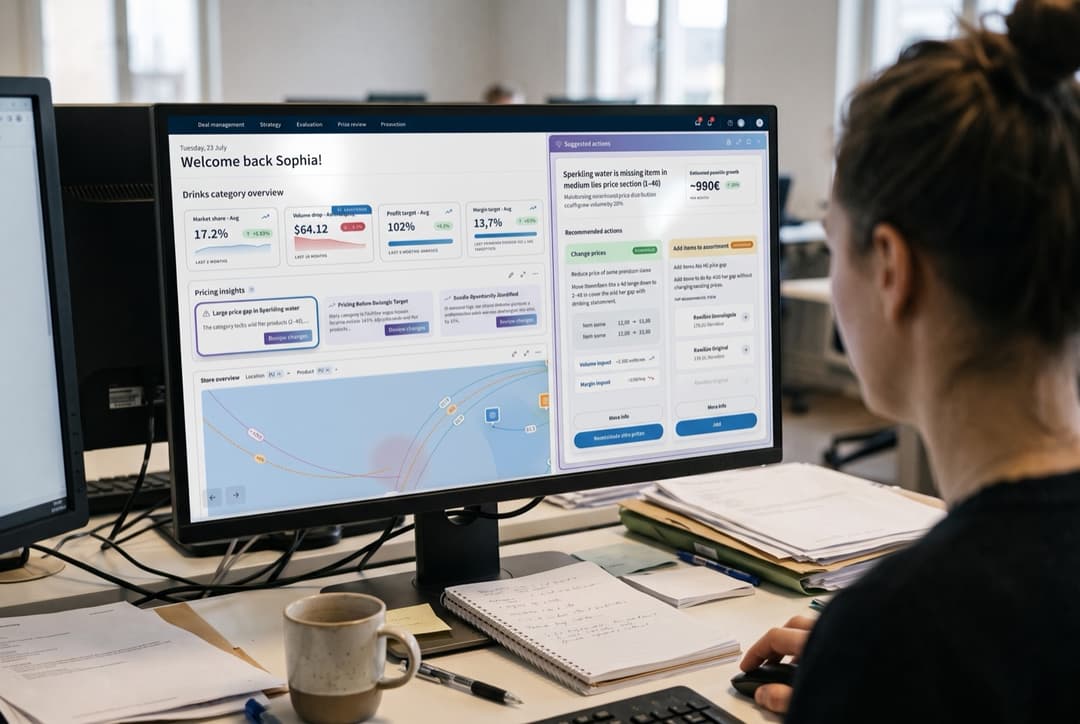
Pricing & Promotions was an early-stage product area in a domain built on data, logic and configuration, where usability and clarity are real differentiators. Much of the roadmap was shaped by sales commitments and deadlines, which made sense: the product needed a solid baseline of features before it could compete on anything else.
The organisation also wanted to move from reacting to deliberate product development. The question was not whether to make that shift, but how fast it could happen without losing delivery.
Leading the organisation from where it is
Pushing for a model the organisation was not ready for would have cost credibility I needed later. So I worked on the shift step by step, alongside my peers.
- Trio rituals, for both the leadership group and the product teams, so product, design and engineering shaped decisions together rather than in sequence.
- Vision and direction with product leaders: clarifying where the product was heading, so day-to-day work could point the same way.
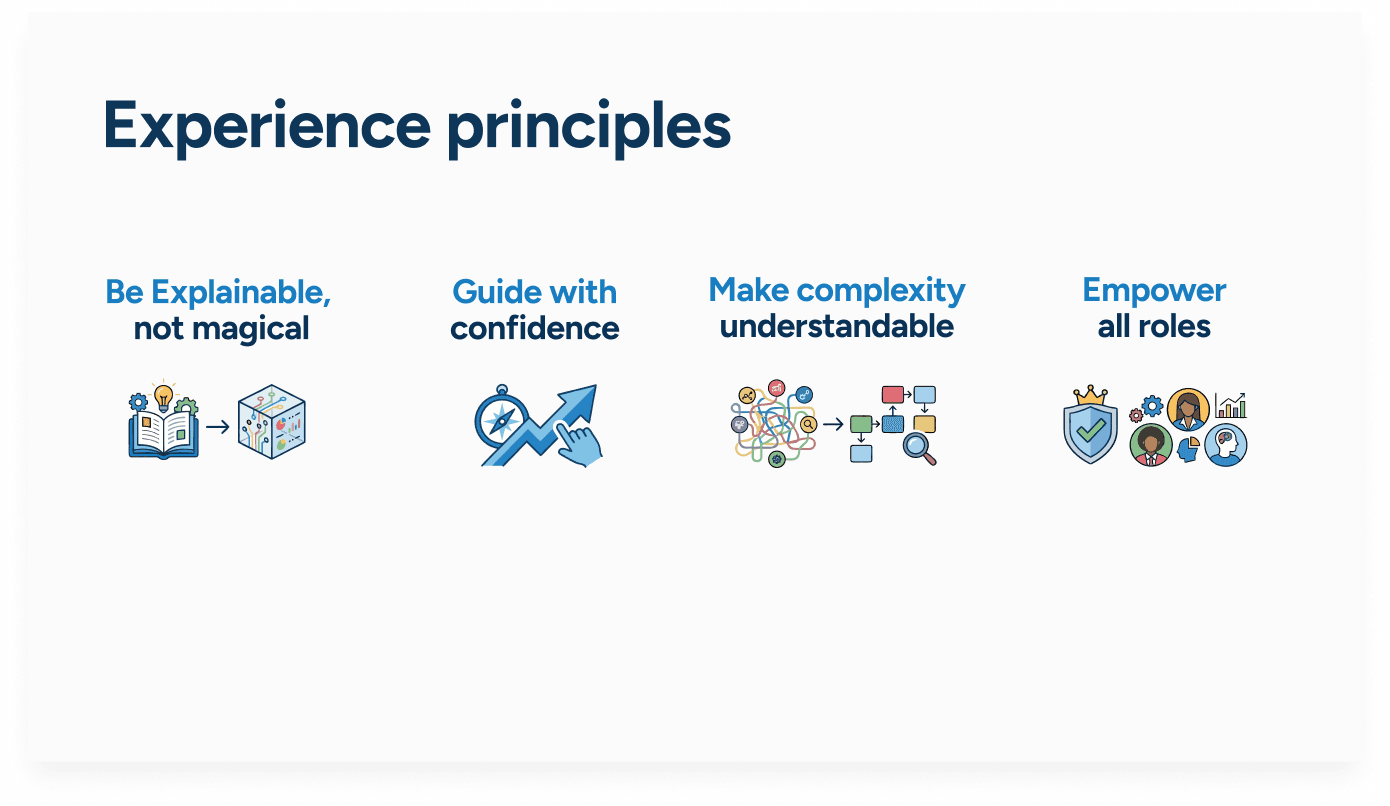
- An experience vision and principles that gave teams a shared standard for complex workflows. In short: explain rather than impress, guide users with confidence, make complexity understandable, and support every role that touches the product.
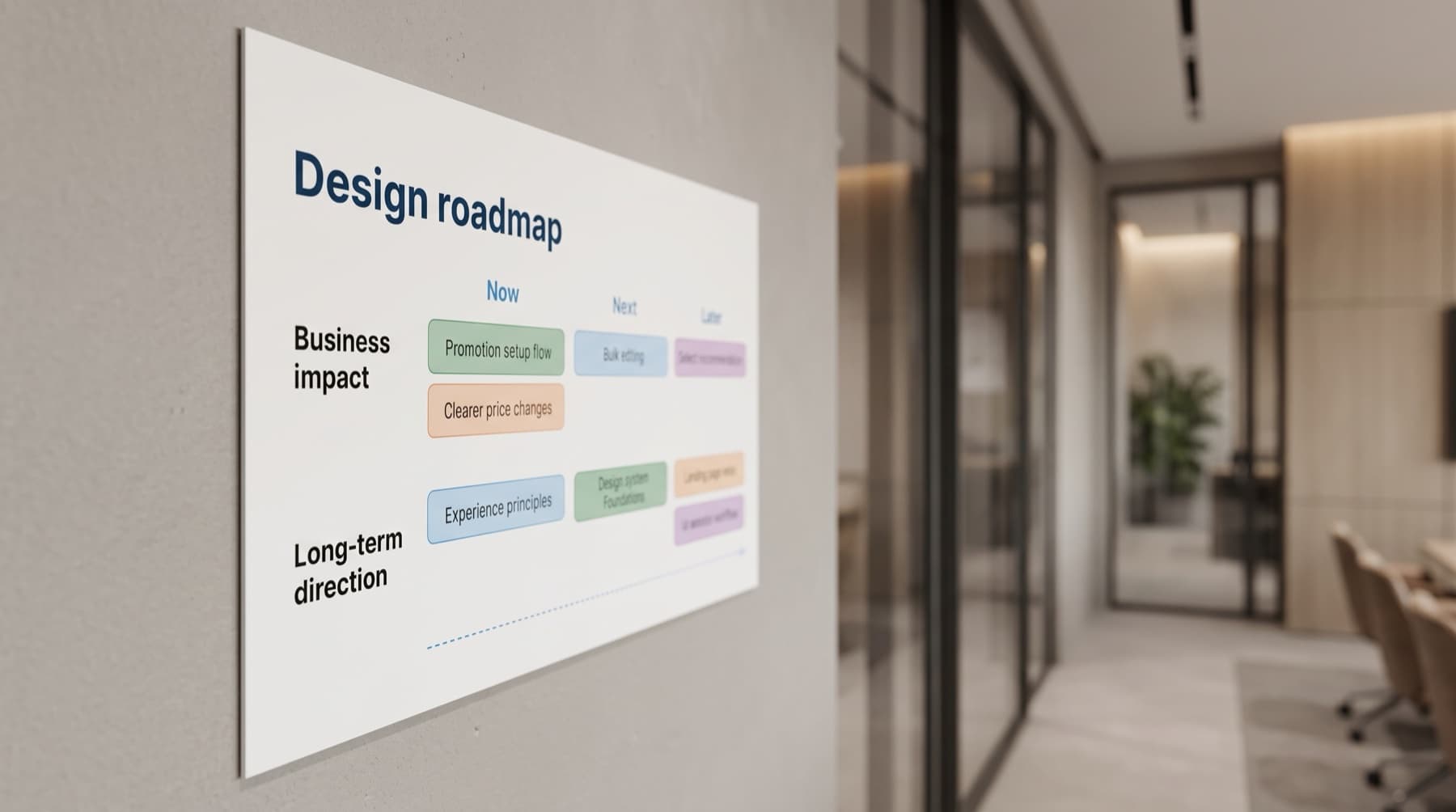
- A design roadmap balancing what would create the most business impact now with the long-term direction.
None of this replaced the delivery commitments. It made them easier to keep, and it gave the longer-term work a place to start.
Building the team from where it is
The same principle applied inside the team. Raising the bar works better as a series of steps than as a single demand.
- Clear growth paths. I helped each designer understand what seniority meant for them and what the next step looked like.
- Rituals for sharing and feedback. Regular critique and sharing sessions turned seven individuals working in separate teams into a team with a shared standard.
- Roles built on strengths. I defined the two lead roles around what each lead did best, so they could take on more responsibility in ways that suited them and create more impact.
- Room for ambition. I sponsored the leads to explore a reimagined landing page for the product area: detailed, ambitious work that gave teams a direction beyond the next deadline.
Moving to AI-first, without slowing down
The biggest change during my time was AI. I wanted the team to move to an AI-first way of working, without pausing the delivery the business depended on.
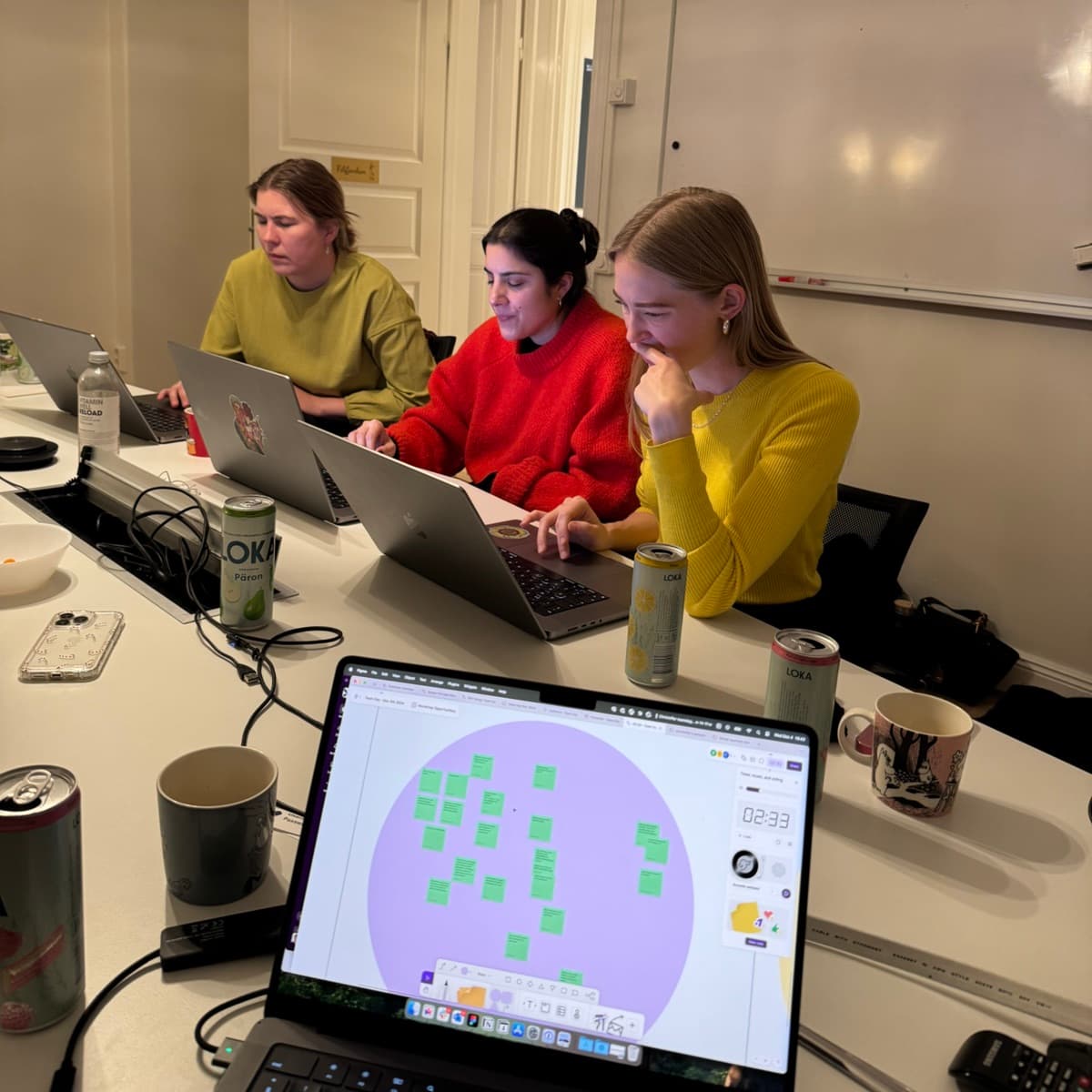
We did it gradually: small experiments in real work, inspirational guests, and workshops on AI for designers. Each step lowered the barrier for the next one. The team went from curious, with only a couple of designers who had tried the tools, to everyone using an AI toolkit across the whole design process, all the way to opening pull requests themselves. And it happened while the team kept its delivery pace.
What changed
- The whole team worked AI-first, using the toolkit across the design process and contributing code through pull requests.
- The team owned its own backlog. Designers shipped smaller UX and UI improvements themselves, without having to compete for them in general prioritisation.
- A shared sense of direction. The vision work and design sprints gave teams a direction that was widely appreciated across the product area, and leadership recognised the contribution.
What I believe
A vision is an invitation, not a verdict. Showing an organisation where it could go works when people can see a path from where they are now. My job as a design leader is to make that path visible and walk it with them: with peers, with the team, and one step at a time.
“This year, we started to see leadership speak about design and experience in a new way. For the first time, ‘experience’ was explicitly referenced in the yearly strategy meeting. Moving an organisation as historically tech-driven as P&P toward prioritising experience is not an easy task, and Christoffer has managed to create early momentum that will have a significant long-term impact.”
“Christoffer has had a significant positive impact on both Design and the wider P&P organisation. He has helped shape how we work and has driven clear improvements in structure, collaboration, and alignment. He values meaningful work over process for its own sake and is comfortable removing or changing something when it doesn't add value.”
“Many times I find myself looking to catch up with Christoffer for a ‘sanity check’ on some unexpected friction, process or demo, as I value his perspective and honesty. [Our product] has benefitted from Christoffer's attentive point of view to make sure we build something coherent long term, and avoid isolated islands with disjointed design.”