Building design through hypergrowth
Kry (2019-2021)
When I joined Kry, the design team was five people and the company was about to grow faster than almost any I have seen. My job was to build a design organisation at full speed, and help a start-up learn to work strategically.
- Role
- Head of Design, part of the R&D leadership and the extended management team
- Period
- 2019-2021
- Team
- Around 5 designers growing to more than 50 people across four markets
- Scope
- Design organisation, ways of working, strategic explorations, brand
The situation
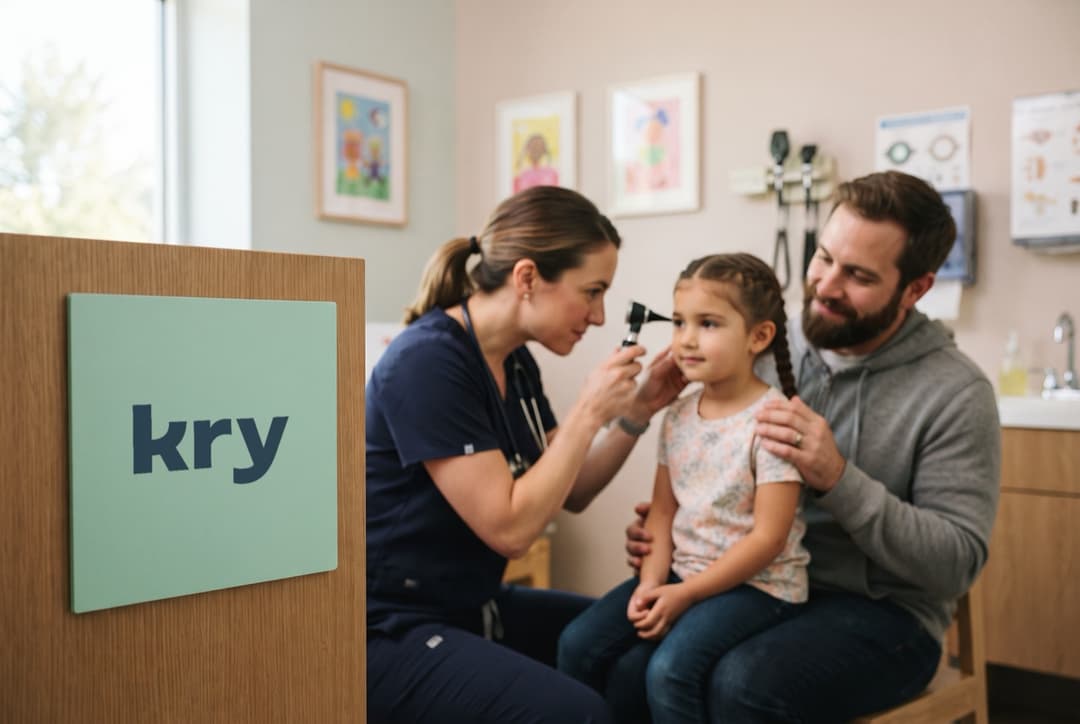
Kry was raising large rounds of investment and expanding from Sweden into the UK, France and Germany. It was also moving from purely digital care into physical primary care clinics in Sweden. Private digital healthcare was new and debated in a traditional sector, which made the stakes for every product decision high.
Design was fast and unstructured: a small group of talented designers keeping up with a company that changed every quarter. The wider organisation worked the same way, with energy and speed, but often from one feature to the next. I joined as the first formal design leader.
My role
As Head of Design I was part of the R&D leadership with the CPO and CTO, and of the extended management team. I worked on several fronts at once: establishing good practice for design and for the cross-functional teams, hiring a lot and fast, and introducing more strategic ways of working.
Building the organisation as it grew
The team grew from five designers to more than fifty people in about two years. The structure had to keep up:
- New disciplines: user research, writing and localisation, and design operations
- A leadership layer: directors leading sub-teams for the patient and clinician product areas
- A growth area bringing together the market-based designers in the UK, France, Germany and Sweden
- A career framework, a big investment of time, but the foundation for hiring and growing people at that pace
Kry attracted people from some of the strongest product companies in the region, and building a team of that calibre was one of the most rewarding parts of the job.
Call 1: lift the organisation from features to strategy
In a start-up, speed comes from instinct and the next feature. At Kry's new scale, the big questions needed a different way of working. I used design sprints and strategic explorations to give the organisation a format for them, and facilitated them myself early on.
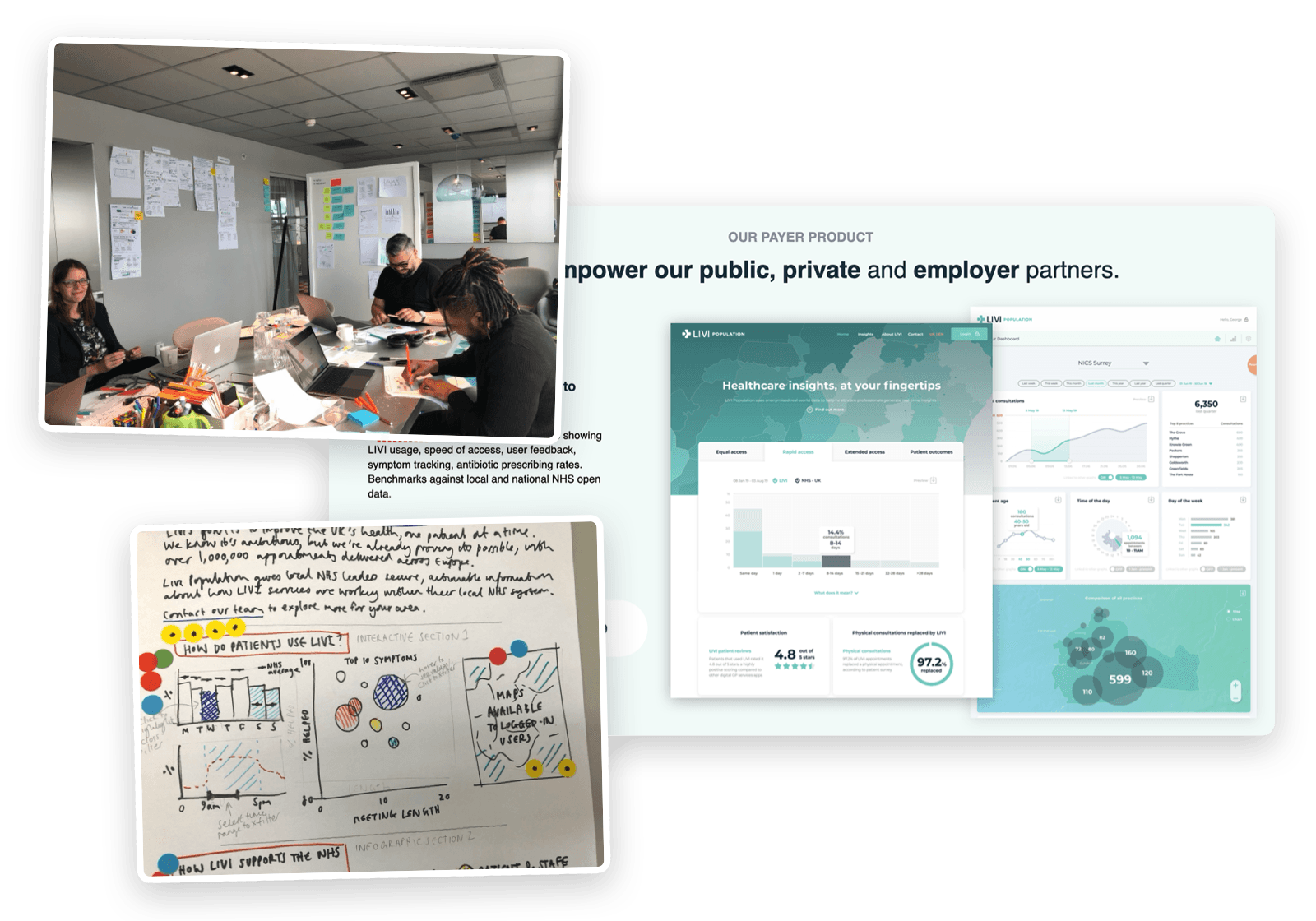
The clearest example was the UK, where design drove a sprint with product, engineering and analytics on a new product for the payers in the NHS-led system. It shipped, and opened the way for a close collaboration with the NHS and primary care partners.
Call 2: work fast and holistically at the same time
Feature development had to stay fast and pragmatic. But as Kry opened physical clinics, the experience no longer lived only in the app. We combined day-to-day product work with a service design approach covering the whole patient journey, digital and physical. A new user research function made sure decisions across markets and product areas rested on a shared understanding of patients and clinicians.
Call 3: lean into the rebrand
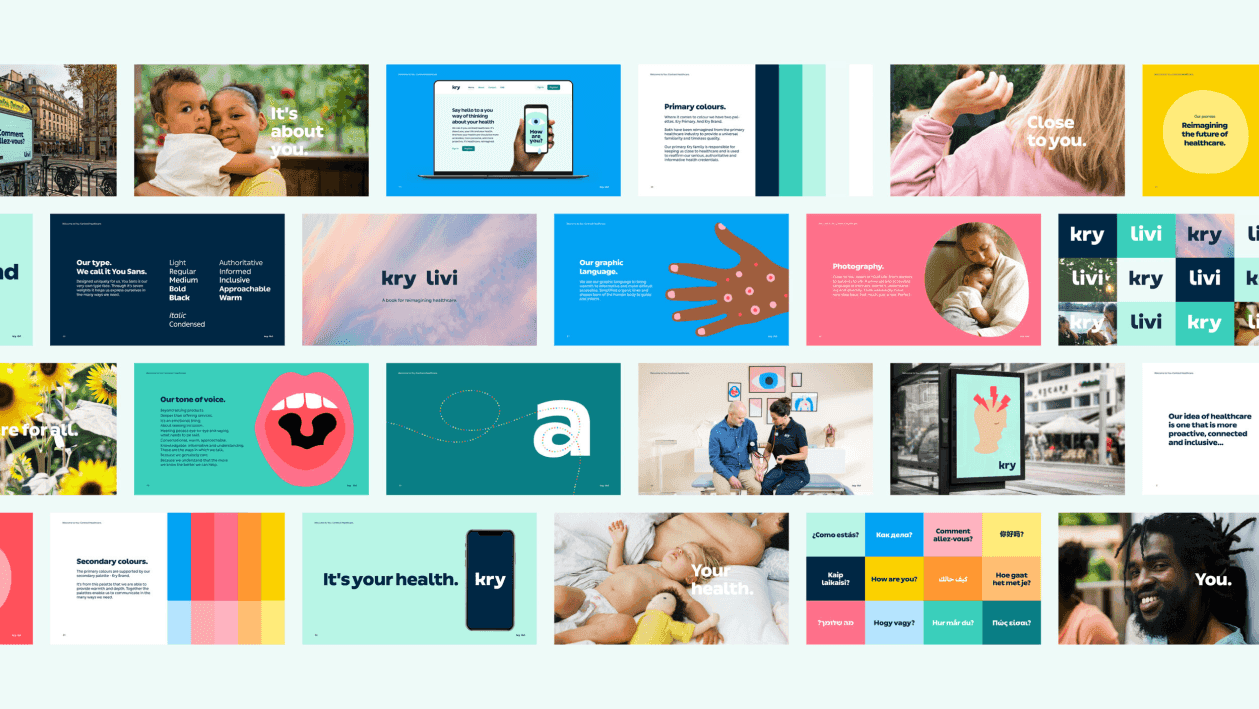
The rebrand was initiated by marketing. I made sure product design was part of it: iterating on the identity for usability and accessibility, planning a practical roll-out, and bridging marketing, digital product and physical spaces.
Call 4: lean in strategically when Covid hit
Covid made demand spike overnight and created new needs and opportunities, while the team suddenly worked remotely, in some markets under full lockdown. The strategic ways of working paid off: design contributed explorations such as how the clinician product could become a SaaS offering.
What changed
- A team of five became a design organisation of more than fifty people, with a leadership layer, new disciplines and a structure across four markets.
- Design was the part of R&D that kept most in step with its hiring plans, and it did so while building a team with diverse backgrounds and perspectives, without compromising on quality.
- Sprints and strategic explorations became a way for the organisation to tackle big questions, with the UK payer product as the clearest result.
What I took with me
When an organisation grows this fast, processes and ways of working go out of date every few months. What lasts are principles and shared beliefs, so I learned to invest in those first, and to communicate them constantly.
Kry also showed me what a culture of grit and intense collaboration towards a shared vision can achieve. It is still the benchmark I measure teams against.
“Above all, I want to highlight the strong design team you built. You not only recruited skilled designers and design managers, but also made sure the organisation had structure, with clear role descriptions and career steps.”
“You managed to build a great team with diverse backgrounds, experiences, and perspectives. This has led to a higher design quality across our products.”
“You drove and established design as a function at Kry, both in terms of people and by creating a very strong culture and sense of community, which is a fantastic foundation for a team to stand on.”