Memollective
collecting shared memories (2026)
Everyone’s photos from the same occasion live in separate camera rolls. Memollective pools them into one collection, pinned to a map and a timeline - and building it taught me a lot about what a designer actually adds when AI does the building.
- Role
- Product strategy, design and build - solo
- Period
- July 2026 – ongoing
- Stack
- React · TypeScript · Supabase · Cloudflare R2 · Mapbox · Vercel
Overview
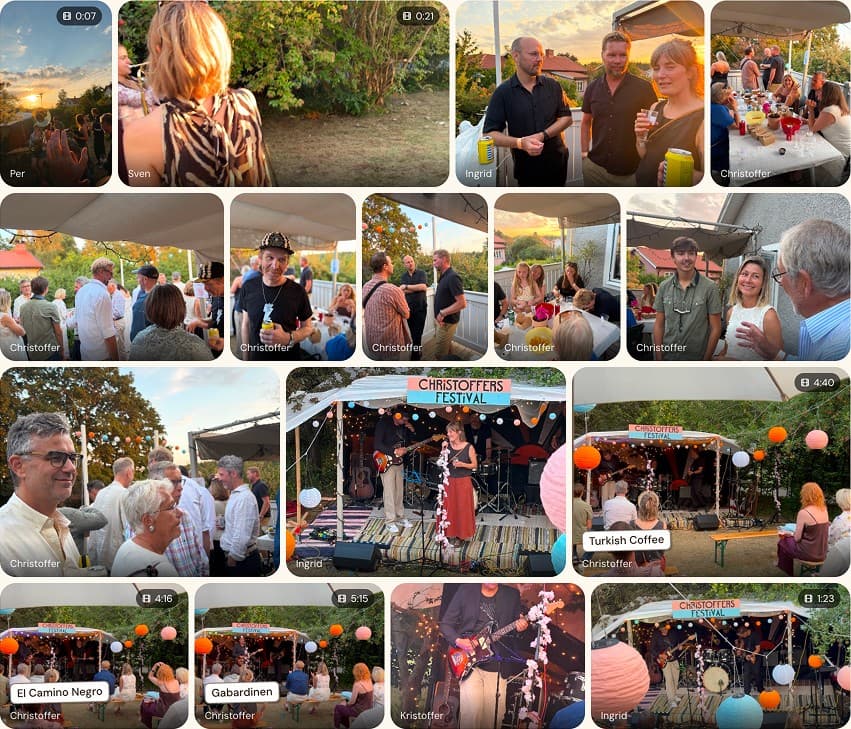
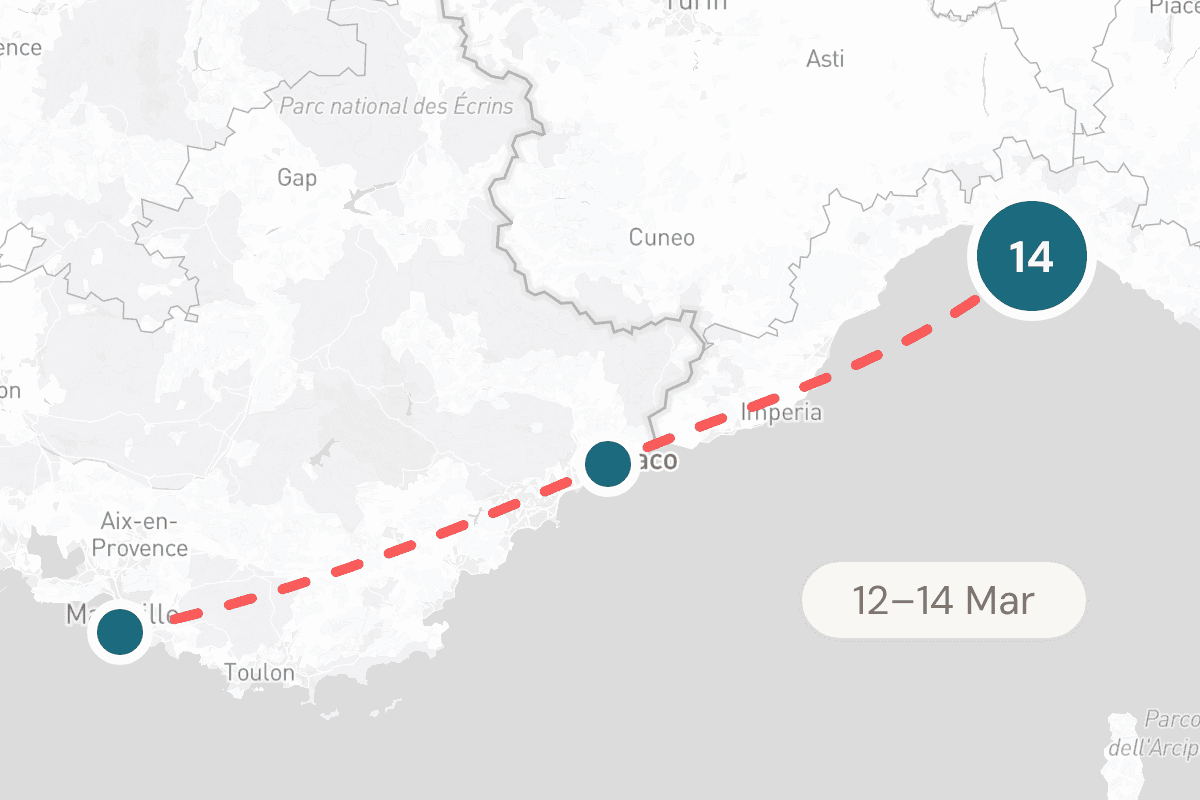
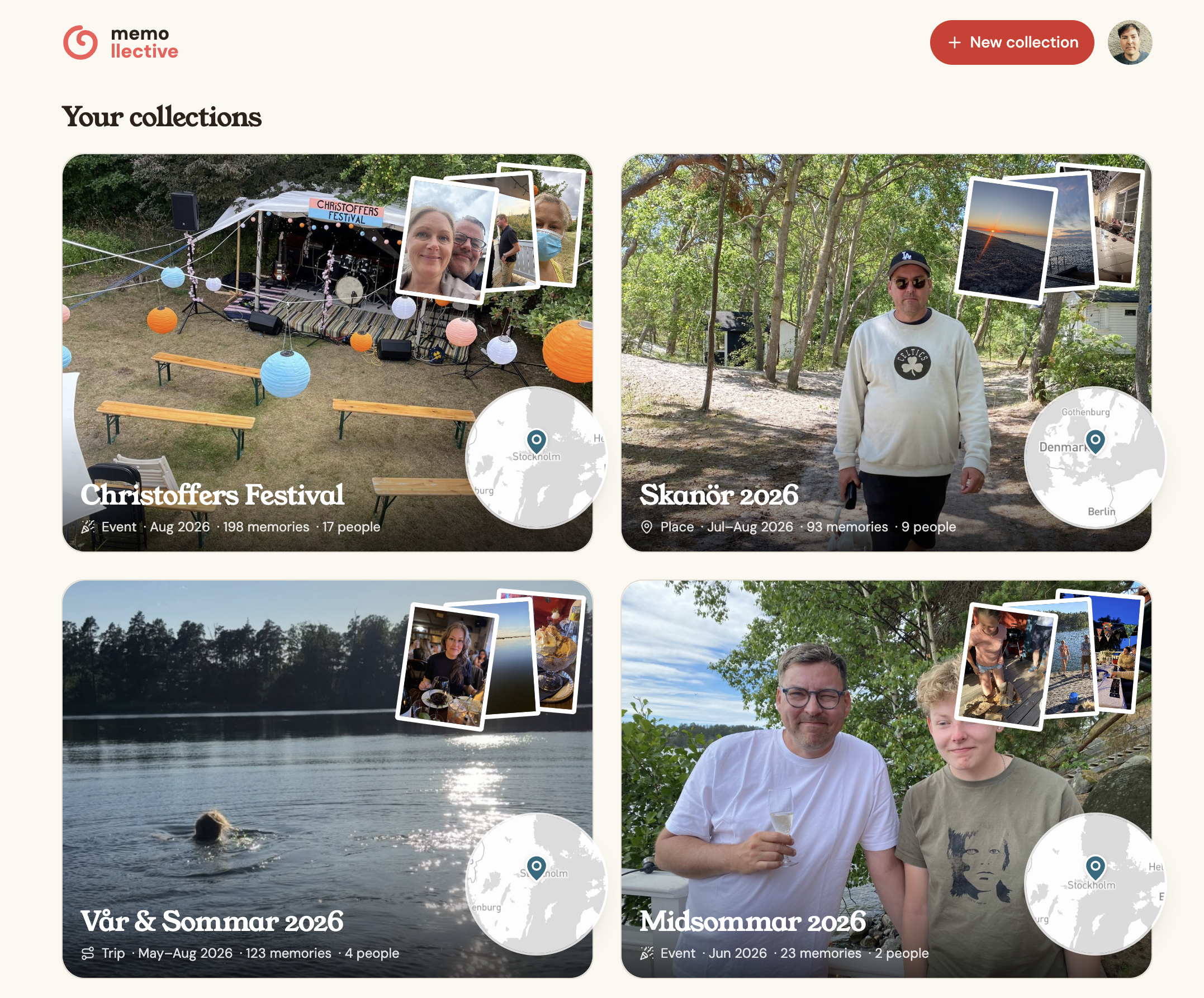
Memollective is a web app where a group pools its photos and videos from a shared occasion into one collection, anchored in space and time. One person creates the collection and shares a link; everyone else contributes from their own device. The pooled result appears on a map and on a timeline.
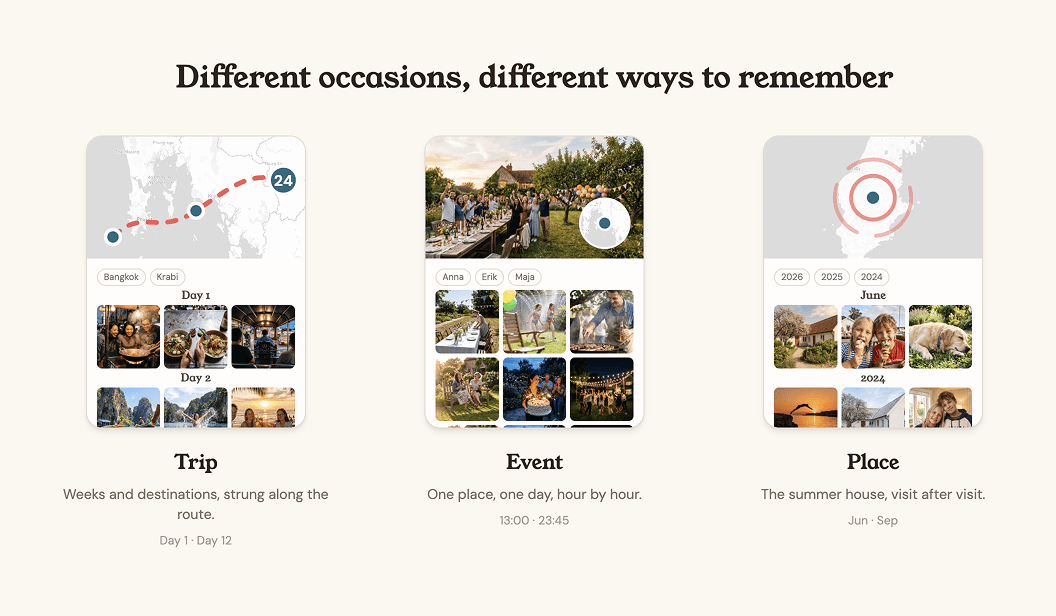
A collection can also be cut into a short film - a trip as a route film, an event as a fast-cut reel, a place as a slow accumulation across years.
The problem
Shared moments get fragmented across everyone’s camera roll. Shared albums and cloud folders are storage rather than experience - no sense of place, no sense of time. Collecting the memories into a real map and a real timeline is what creates an experience rather than just a folder.
Building it with AI
I built Memollective with Claude Code - not just the code, but the whole thing. Ideating on the concept, doing the research, framing the MVP, then building it out: brand identity, technical architecture, monetisation paths, marketing plans, UX philosophy and a few thousand small design decisions.
Working this way for a few months has made some things clear, and most of them were not what I expected going in. The short version is that the machine is now excellent at the parts I am worst at, and weakest at the parts I have spent twenty years getting good at.
What it does well
It is extremely good at code. I am not the best judge of this, but the quality and the sheer proactivity - architecture, scalability, testing, refactoring - go well beyond anything I could have specified myself.
It is pretty good at UI. A decade of standardising interfaces has made them codeable, and the patterns are established enough that it has become pretty easy to produce a decent UI. If you let it build on its own it will be generic and feel very AI. But it is still better than a lot of junior work I have reviewed over the years.
It is decent at systemic design. Given clear direction it will work in a design-centric, scalable way and take usability and accessibility seriously. What it needs is a trained eye to hold the course - and someone who believes the course is worth holding in the first place.
What it doesn’t
It is not good at copy. Underneath a surface of clever phrasing there is a specific voice with tendencies I could not completely get rid of. Every final line I needed to write myself.
It is bad at UX. It reasons well about best practice and works as a useful soundboard, but what it produces is full of holes. User experience is mostly choices rather than codeable rules, and which choice is right depends on decisions made elsewhere in the product. That kind of contextual judgment is much harder to encode.
And it is at its worst on product - with one caveat, because it is a good product partner to think out loud with. The problem is that it will not tell you which calls matter, and it will never ask the question you failed to ask. Its eagerness to please is a risk rather than a help if you are not paying attention. It will build the wrong thing, willingly and well.
Why designers are well placed for this
The conclusion I keep returning to is that designers are unusually well positioned to build products right now. AI can carry the engineering and much of the product thinking. It can carry a lot of the design too.
But in each of those there is a gap between what gets produced and what good looks like. In my experience the design gap is the widest of the three, and the hardest for a non-designer to close, because closing it rests on judgment accumulated over years of looking at work and deciding it is not good enough yet.
That doesn’t mean that designers are untouchable as AI evolves how we work. But it tells us something about the part of the design craft that will be crucial, and not that easy to just encode.